
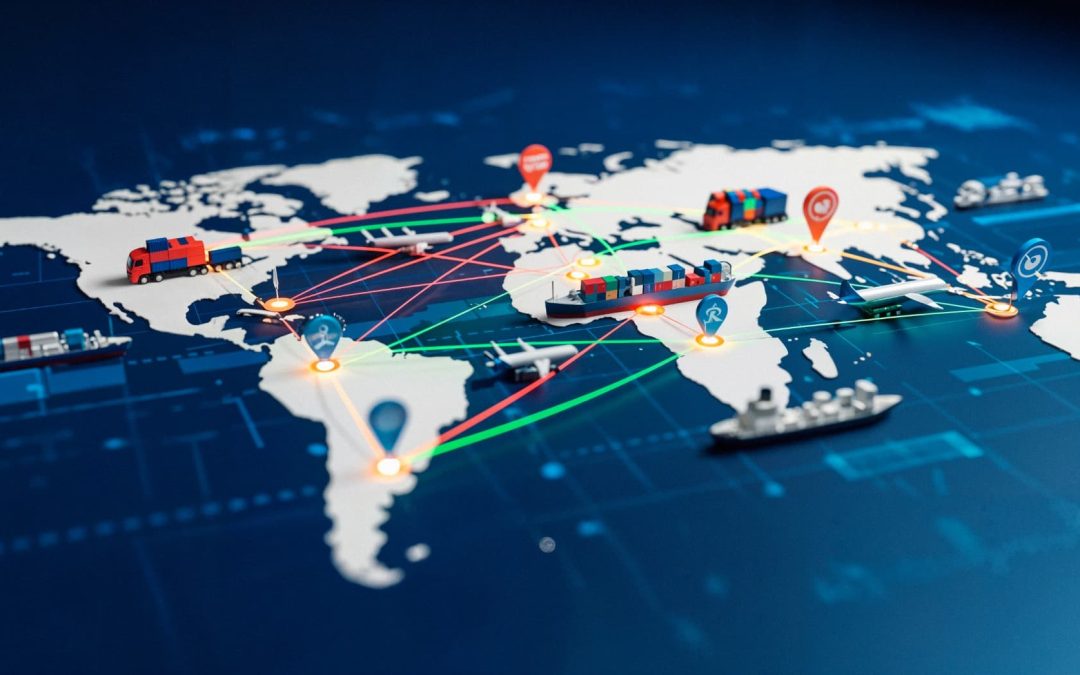
Exporting is not simply putting things in a box and shipping them across the world. It is much more. It means dealing with regulations that vary from country to country, certificates that must match perfectly, labels, declarations, contracts—all in the correct language, of course. Because if you get the language (or nuance) wrong, what should already be on the shelves may end up stuck in customs. Literally.
So if your company already exports or is about to cross borders, this guide is for you. We will take a close look at which documents you must translate without fail, how a translation can save you a lot of trouble… and how to avoid the mistakes that cost time, money, and reputation. Because yes, it happens more often than you think.
Why is translating export documents crucial?
Because mistakes are costly. And in international trade, they are very costly. If documents are not in a language understood by customs or health authorities in the destination country, nothing moves forward. It is not a suggestion—it is a requirement.
When it comes to exporting, translation is not a nice extra to look good. It is a legal, technical, and logistical requirement. Especially in these cases:
- Sanitary and phytosanitary regulations
- Technical certificates
- Product labeling
- Sales or logistics contracts
- Documentation for inspections, audits, or controls
A poor translation can cause your shipment not to arrive. And we’re not just talking about delays: we’re talking about containers being held, goods blocked or even rejected, penalties, or total loss. Sounds exaggerated? It isn’t. It happens more often than you imagine.
The documents you must translate before exporting
1. Commercial Invoice
The key document. It states who sells, who buys, what is sold, for how much, and under which conditions.
Why translate it? Because it is presented to customs, and authorities must understand it without making assumptions. Many countries require it in their official language, or at least in English.
Pro Tip: Forget machine translators. An error in Incoterms or tariff codes can be extremely costly.
2. Packing List
This details exactly what is in the shipment: quantities, dimensions, weight, packaging.
Why translate it? Because if the inspector understands what the package contains, they are less likely to open it. Fewer problems, fewer delays.
3. Certificates of Origin
Usually issued by the Chamber of Commerce, they state where the product was manufactured.
Why translate them? Because depending on the country of origin, certain tariffs apply. If the receiving country does not understand the document, it may impose the worst-case scenario by default—or directly reject the shipment.
4. Technical and safety documentation
This includes manuals, datasheets, certificates of conformity, CE marking, safety sheets…
Why translate them? Because in many countries, if these are not translated, the product cannot be sold. It doesn’t matter if it’s a machine, a cosmetic, or a box of cookies. Without proper technical documentation, it won’t cross the border.
5. Sanitary and phytosanitary certificates
Essential if you work with food, beverages, plants, medicines, or animal products.
Why translate them? Because there is no room for error: they directly affect public health. And no, sending them in Spanish is not enough. In most cases, they require official translation.
6. International sales or logistics contracts
Signing without understanding the contract. Or worse, having it misunderstood in the other language. A rookie mistake.
Why translate them? Because a single misinterpreted clause can lead to serious legal issues. And what could have been prevented with a professional translation should not end up in court.
7. Product labeling
Countries regulate in detail what labels must state: ingredients, origin, warnings, language…
Why translate it? Because if you don’t comply with local regulations, your product cannot be sold, even if it’s already there. Simple as that.
What happens if you don’t translate correctly? Real costly mistakes
A Spanish sausage company lost a container in the U.S. because their label said “curado” instead of “dry-cured.” The result? Rejected product and almost a lost client.
A machinery manufacturer faced four weeks of customs delays in Germany. Why? The manual was not in German, as required by EU regulations.
A pharmaceutical company mistranslated the word “dosificación,” confusing it with “single dose.” The mistake triggered a health alert… and a fine.
The takeaway? A poor translation can cost you much more than hiring a professional translator from the start.
How to avoid mistakes in your export document translations
- Work with translators familiar with the sector and international trade. Not all of them are.
- Avoid machine translators and unfiltered platforms. Don’t risk it just to save a few lines.
- Always check the requirements of the destination country: language, format, certificates… each has its own rules.
- Request double-checking. Good translators work in teams with specialized proofreaders.
- If you want to simplify things, centralize everything in a professional agency (like EJB Traducciones).
Checklist for exporters (with updated translations)
Before your shipment crosses the border, make sure you have:
- Translated commercial invoice
- Translated packing list
- Sanitary and sworn certificates ready
- Manuals and datasheets in the local language
- Labeling adjusted to local regulations
- Translated and reviewed contracts
- Signed translations with legal validity
Conclusion: exporting without translation is exporting blindly
Today, if you export without properly translating your documents, you are taking a huge risk. Customs are stricter than ever, and the smallest mistake can stop the entire process, cost you a sale, or directly get you into legal trouble.
The good news is that it can be avoided. You just need to work with professionals who master the language, the regulations, and the shortcuts.
At EJB Traducciones, we have years of experience supporting exporting companies in this journey. From contracts to labeling, including sworn translations and technical documentation. If you are looking for a way to export without surprises, let’s talk.